Bedding · Nursery guide
Crib Sleep Surfaces: Firmness, Fit, and Everyday Care
A crib mattress is a quiet piece of equipment with an unusually consequential job. The useful questions are not whether it feels plush in a showroom, or whether its cover has the most appealing weave, but whether it is firm, flat, properly fitted to the crib, and straightforward to care for without adding anything that compromises the sleep space.
In a nursery, the small mattress can attract the large anxieties. A caregiver may compare organic cotton with conventional cotton, latex with other materials, seams with zippers, certifications with claims printed in a graceful typeface. These are understandable inquiries: a baby sleeps for many hours, and a mattress is a substantial object to choose for someone who cannot yet explain what feels comfortable. But the first work of comparison is practical. The sleep surface must be designed for the crib, fit it snugly, remain firm and flat, and be used according to the crib and mattress manufacturers’ instructions.
That checklist has a certain unromantic clarity. It also helps keep the discussion in proportion. Materials and certifications can tell a family something about how components were grown, processed, or tested. They do not, by themselves, establish that a mattress fits a particular crib or that a softer surface is appropriate for an infant. A well-informed choice begins with the actual dimensions and the instructions for the specific products in the room.
Start with the crib, not the catalog
Cribs and mattresses are often described by standard size, but a familiar label is not a substitute for checking measurements. Before buying, note the crib’s model and its manufacturer’s instructions, then compare those requirements with the mattress specifications. For a full-size crib, U.S. regulations specify minimum interior dimensions for the crib and a minimum mattress size; the mattress also needs to fit without dangerous gaps. Mini cribs and other nonstandard sleep spaces have their own dimensions, so a mattress described as “crib size” should never be assumed to fit them.
Check the mattress’s length, width, and thickness, along with any information about the crib’s approved mattress range. If you already own the crib, measure its interior as directed by the manufacturer. Use the mattress documentation to confirm the intended dimensions rather than relying on a retailer’s general category or a product title. Measurements can vary, and labels such as “standard,” “compact,” or “portable” are not interchangeable promises.
Once assembled, the mattress should sit level and securely within the crib. Look around the entire perimeter, not just at the corners that are easiest to see. There should be no substantial opening between the mattress edge and the crib sides. A mattress that bunches, rocks, or leaves a gap is not made safer by a fitted sheet pulled tight over it. If the mattress does not fit as the crib instructions require, stop using that combination and contact the manufacturer about a compatible replacement.
The fit check: simple, careful, repeatable
A fit check is a small household ritual worth repeating whenever the mattress is changed, moved, or covered with an approved fitted sheet. Press it gently into place and look along each side for gaps. Confirm that it remains flat and does not slide out of position. Follow any specific fit test supplied by the crib manufacturer; a generic rule of thumb should not overrule the instructions for the particular crib.
Sheets deserve attention because they are the layer most often taken off and put back on. Use a fitted sheet made for the mattress dimensions, with elastic that holds it securely around the corners. Smooth out excess fabric. A sheet that is too large, loose, or prone to coming untucked is not a convenient workaround for a mismatched mattress. Nor should a caregiver compensate for an undersized mattress with towels, rolled blankets, or other material tucked into the gaps. The answer to a poor fit is a correctly matched sleep surface, not improvised padding.
Thickness is part of fit, too. A thicker mattress may appear more substantial, but it can affect how the mattress sits in the crib and may change the usable height of the crib’s sides. Check the manufacturer’s permitted mattress thickness and use the crib’s mattress-support settings as directed. As a child grows and the support is lowered, revisit the instructions rather than assuming the original configuration remains suitable.
Firmness is not a showroom sensation
For an infant sleep surface, firm and flat are not merely aesthetic preferences. Public safe-sleep guidance from authorities such as the U.S. Consumer Product Safety Commission and the American Academy of Pediatrics calls for a firm, flat sleep surface designed for infant sleep, covered only by a fitted sheet. A soft surface that feels inviting to an adult is not necessarily the right surface for a baby. Pressing a mattress in a store, comparing it with a guest-room bed, or choosing by a “plush” label can therefore send the comparison in the wrong direction.
Firmness should be assessed through the product’s intended use and documentation, not by inventing a home test or trying to make the mattress feel softer. Select a mattress that is specifically intended for the crib and infant sleep setting, and follow the crib and mattress instructions. Do not add a topper, cushion, pillow, or extra layer to change its feel. These additions can alter the sleep surface, interfere with fit, or introduce a hazard that was not present in the original setup.
Parents and caregivers may encounter different language in product descriptions: supportive, responsive, contouring, natural, or breathable. Such terms can describe construction or marketing positioning, but they do not replace clear information about the product’s intended use and applicable safety requirements. When a claim is vague, seek the manufacturer’s specifications and relevant compliance information. If those details are unavailable, do not infer suitability from a material name or a certification logo.
Materials, organic claims, and what a label can say
Organic materials can be a meaningful part of a family’s purchasing priorities. A mattress or pad may contain organic cotton, wool, or latex, and a textile certification may provide information about the material or processing covered by that standard. But “organic” is not a synonym for “safe for every use,” “firm,” or “fits this crib.” Those are separate questions, and they deserve separate answers.
Read the product description closely. Identify which components are certified, what the certification applies to, and whether the statement refers to the finished product or only a particular fiber or component. GOTS, for example, is a textile-processing standard with requirements across its scope; GOLS concerns organic latex. A certification can help make a material claim more verifiable, but it does not tell you whether a mattress dimension matches your crib. For that, the product specifications and crib instructions matter more.
Construction also affects daily life. A removable cover may sound easier to clean, but a caregiver should not remove or replace any part unless the manufacturer says it is designed to be removed. A mattress with a non-removable cover may instead require spot cleaning. Ask whether the product can be machine washed, whether it must be kept dry, and how it should be aired or stored. A material that sounds appealing in a catalog may have care requirements that do not suit the realities of a nursery.
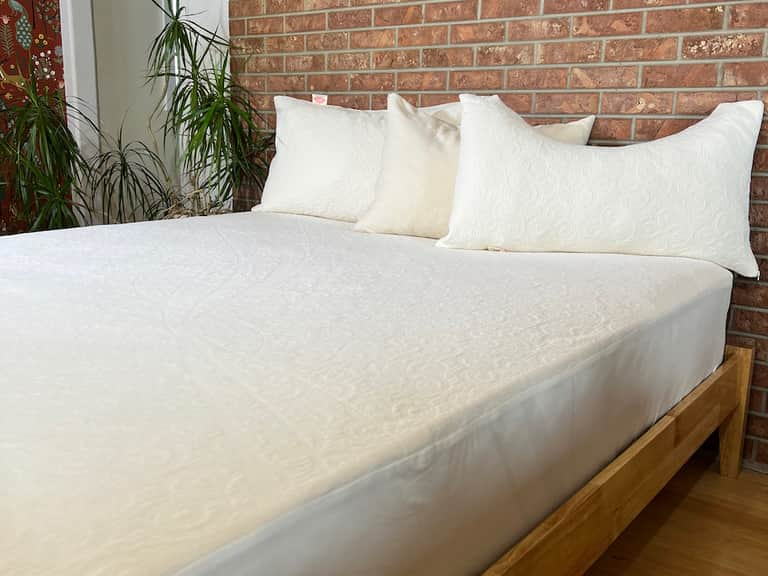
For families considering a dedicated crib mattress pad, verify first that it is intended for the exact mattress and crib configuration and that its use is permitted by the manufacturers’ instructions and relevant safety guidance. For example, an organic cotton crib mattress pad is described as a washable layer sized for a standard crib mattress. That description is useful for understanding its materials and care, but it is not a substitute for checking your own crib and mattress instructions. Do not use a pad if it changes the fit, creates a loose layer, or is not approved for the sleep setup. The basic infant sleep surface remains firm, flat, and covered by a securely fitted sheet.
The ordinary work of keeping it clean
Nursery care is less like a laboratory procedure than a series of small, recurring negotiations with spills, laundry, and the clock. A practical routine begins with the care label. Follow the mattress maker’s instructions for cleaning and drying, and those of any fitted sheet or approved cover. Some covers can be machine washed; others are intended for spot cleaning only. Washing an item in a way the manufacturer prohibits can damage its structure, change its dimensions, or affect how it fits.
If a mattress surface becomes soiled, remove the bedding and clean the affected area as the manufacturer directs. Avoid saturating the mattress unless its care instructions explicitly permit that method. Allow any cleaned surface to dry completely before replacing bedding or using the sleep space. Moisture trapped within layers can create odor and make the mattress harder to maintain. Do not use strong cleaners, bleach, fragrances, or other treatments unless the manufacturer says they are appropriate for that product.
Routine checks need not become an elaborate inspection. When changing the sheet, look for a torn cover, damaged seams, a persistent odor, moisture, or a change in the mattress’s shape. Check that the mattress still lies flat and fits the crib as intended. If it has been stored, moved, or exposed to water, revisit the care instructions before putting it back into use. Retire a damaged or misshapen surface rather than trying to repair it with padding or tape.
Washable bedding is helpful only when it is used properly. Launder fitted sheets as needed and dry them fully before putting them back on. Keep spare sheets handy if that makes an overnight change less frantic; it does not require layering multiple sheets on the mattress. A neatly prepared sleep space is not one with the most layers. It is one with the correct mattress, one securely fitted sheet, and no loose objects.
Keep the sleep space deliberately spare
The nursery invites decoration. There are blankets folded over the rail in photographs, pillows arranged for a moment, and stuffed animals waiting on a chair. The crib itself, however, is not the place for these flourishes during infant sleep. Follow current safe-sleep guidance: use a firm, flat sleep surface with a fitted sheet, and keep soft bedding and loose items out of the crib. A decorative quilt may be lovely elsewhere in the room; it does not belong on the mattress while the baby is sleeping.
The same principle applies to products marketed as extra protection or comfort. Do not add a pillow, wedge, positioner, topper, rolled towel, or improvised barrier to correct a problem or change the feel. If you are worried about a gap, the mattress fit is the issue to resolve. If you are worried about the surface, consult the manufacturer and your child’s health care professional rather than layering another product over it.
Caregivers may also be comparing mattresses for a nursery used by more than one child or considering a secondhand item. In those situations, verify the model, age, condition, and instructions. Check whether the mattress is compatible with the crib and whether there is any product recall information. A mattress that looks clean may still have a damaged cover or uncertain history. If you cannot establish that it is intact and appropriate for the crib, a replacement may be the more prudent choice.
A compact comparison checklist
When faced with several plausible options, a short list can be more useful than another hour spent reading adjectives. Before purchase, confirm the following:
- Intended use: The mattress is specifically designed for the crib or sleep space in question.
- Dimensions: The listed length, width, and thickness meet the crib manufacturer’s requirements.
- Fit: The mattress sits flat and snugly, without unsafe gaps or movement.
- Firmness: The product is a firm, flat infant sleep surface, not a soft adult-style mattress or topper.
- Documentation: Safety, material, and certification claims are clearly described and supported by product information.
- Care: You know which parts can be washed, how they should be cleaned, and how to dry them fully.
- Compatibility: Any fitted sheet or approved pad is made for the mattress and does not loosen, bunch, or alter its fit.
- Condition: The mattress is intact, with no tears, sagging, persistent dampness, or unclear history.
After purchase, repeat the fit check at home. Keep the instructions somewhere accessible, and use them again if the crib is reassembled, moved, or adjusted. A product page can be helpful, but the physical crib and mattress are the final test of compatibility. If the combination does not match the stated requirements, pause and seek guidance from the manufacturers.
A quieter kind of preparedness
Choosing a crib mattress does not need to become a referendum on every aspect of modern life. Organic fibers, local sourcing, low-odor materials, and easy washing may matter to a family, and those preferences can shape a thoughtful purchase. The orderly approach is to place them after the essential checks: intended use, firm flat surface, dimensions, secure fit, and instructions for care.
There is comfort in knowing what a label does and does not tell you. A certification can help illuminate a material’s origins or processing. A washable cover can make a household task easier. Neither one can correct a mattress that does not fit or turn a soft surface into a firm one. The best comparison is therefore not the most complicated. It is the one that separates product claims from practical requirements and verifies each in turn.
In a nursery, the finished arrangement should look almost plain: a suitable crib, a compatible mattress, and a fitted sheet held taut around it. That simplicity is not a failure of imagination. It is the outcome of careful choices made before the lights go out—and checked again when the laundry is done.