Understanding GOTS and GOLS: A Practical Guide to Organic Mattress Certifications
A discerning look at the labels that promise safety, transparency, and sustainability in the sleep we cradle each night.
Published September 30, 2026
Certifications are rarely the most exhilarating topic in the realm of sleep, yet they sit at the core of trust between a consumer and a product. When you lie down on an organic mattress, you are not merely seeking comfort; you are making a statement about materials, supply chains, and the promises brands make to protect your health and the planet. Two of the most important labels in this domain are GOTS and GOLS, each with its own remit and a shared commitment to purity, safety, and ecological accountability.
This guide unpacks what GOTS and GOLS certify, how they are earned, and why they matter. It also offers a practical framework for reading labels, cross-checking standards, and applying these insights to your shopping decisions—whether you are comparing latex- or wool-filled components, or weighing the benefits of cotton versus synthetic overlaps in a multi-layered mattress.
What GOTS Is and What It Certifies
The Global Organic Textile Standard (GOTS) is widely recognized as the premier standard for organic textiles. It is not a single-material certificate; rather, it governs the entire supply chain—from the farming of the raw fibers to the finished product’s labeling. To earn GOTS certification, a textile product must meet rigorous criteria across several domains:
- Organic fiber content: A substantial portion of fibers used must be certified organic, with minimum thresholds that vary by fiber type.
- Environmental criteria: Restrictions on toxic chemicals, dyes, and finishes; conservation of water and energy; and sound wastewater management.
- Social criteria: Compliance with labor standards and fair working conditions along the supply chain.
- Chain of custody: Transparent documentation that tracks every stage of production from the field to the finished product.
When applied to mattresses, GOTS certification is particularly meaningful for the fabric covers, padding components, and any textile finishes. A GOTS-certified mattress component signals that the textile portion of the product adheres to high ecological and social standards, with an emphasis on organic content and responsible processing. It does not, by itself, certify other elements of the mattress such as springs, latex cores, or non-textile layers unless those materials carry a separate, applicable certification.
What GOLS Is and What It Certifies
The Global Organic Latex Standard (GOLS) is specifically targeted at latex—the natural product derived from rubber trees—and the processes that convert raw latex into finished latex foam products, including mattresses, toppers, and pillows. GOLS focuses on:
- Raw material origin: The latex itself must be from organic sources and harvested in a manner that respects ecological balance.
- Manufacturing processes: Control over chemical additives, curing agents, and processing aids to ensure the final latex content remains free from toxic residues beyond defined thresholds.
- Supply chain transparency: Documentation that documents the material flow from harvest through manufacturing to the finished item.
- Claims and labeling: Clear disclosures about the organic content and the certification status, preventing misrepresentation.
For latex mattresses, GOLS is especially valuable because latex, when produced from organic sources and processed without excessive synthetic additives, can offer a balance of buoyancy, breathability, and durability. A GOLS-certified latex core or layer assures that the primary filling aligns with organic standards, reducing exposure to synthetic chemicals in the most intimate layer of the bed.
Reading Labels with Confidence: A Practical Framework
Label literacy is the practical counterpart to the theory behind certifications. A well-structured framework helps shoppers translate certifications into meaningful distinctions among products. Here is a straightforward method you can apply across brands and product types:
- Identify the certifications present on the product. Note which components they apply to (fabric, padding, core materials, layering, etc.).
- Assess the scope: Does a certification cover only a textile layer, or does it extend to the entire mattress?
- Check for cross-certification: Many high-integrity products carry multiple labels (e.g., GOTS for textiles and GOLS for latex) to ensure comprehensive safety and sustainability.
- Inspect the supply chain documentation: Look for explicit chain-of-custody statements, third-party audit reports, or product certificates from reputable bodies.
- Cross-reference with independent resources: Organizations and industry reports can provide additional context about how a brand interprets and implements certification requirements.
In practice, you will likely encounter combinations of labels such as GOTS on the textile cover and GOLS on latex components. Those align with a holistic approach to eco-friendly sleep, where both shell and core materials are scrutinized. However, remember that certification labels are not interchangeable benchmarks; they are part of a broader system of transparency and environmental stewardship.
Certifications in Context: Latex versus Wool versus Cotton
Different mattress components present distinct certification considerations. Here is a concise guide to how GOTS and GOLS interact with common materials:
- Latex cores and overlays: GOLS is the most relevant standard for organic latex, ensuring organic sourcing and controlled processing. A latex core with GOLS marks a strong signal of organic content and responsible handling.
- Cotton covers and padding: GOTS is highly relevant for cotton-based textiles, including covers, quilting, and certain padding layers. Organic cotton that carries GOTS certification provides assurance about farming practices and textile processing.
- Wool components: Wool can be certified under broader organic textile standards that intersect with GOTS, but the wool supply chain may also connect with other animal-welfare and organic wool certifications. When wool is part of a mattress, verify that any textile covers or batting are GOTS-certified if organic textiles are essential to you.
- Foams and synthetic blends: Pure foams and synthetic layers generally fall outside GOTS, which emphasizes natural fibers. In such cases, certifications like OEKO-TEX and Made Safe may provide additional assurance about chemical content, even when the primary material is not organic.
To shoppers, the takeaway is: a mattress can carry multiple certifications that together tell a story about materials, processing, and stewardship. The more comprehensive the certification matrix, the clearer the alignment with health and environmental goals. When you see GOTS on a textile component and GOLS on a latex component, you are witnessing a layered commitment to organic integrity that spans the core and the shell.
Cross-Checking with Other Standards: OEKO-TEX and Made Safe
GOTS and GOLS stand tall, but they do not stand alone. Consumers often look for additional assurances that speak to chemical safety, absence of flame retardants, and overall non-toxicity. Two widely recognized companions are OEKO-TEX and Made Safe:
- OEKO-TEX: This certification focuses on the absence of harmful chemicals in textiles and provides transparency about chemical testing. It is process- and product-specific, offering reassurance about fabric safety for people with sensitivities.
- Made Safe: This standard emphasizes ingredients and formulations that are safe for people, animals, and the environment. It often complements organic certifications by addressing chemical exposure in a broader, consumer-facing context.
In the marketplace, you may encounter a product that earns GOTS on the textile shell, GOLS on the latex core, and OEKO-TEX or Made Safe labels as supporting safety attestations. That combination provides a multi-layered map of safety and environmental responsibility, enabling shoppers to move beyond marketing language toward verifiable claims.
Buyer Tips: Practical Steps for Sorting through Certification Claims
If you are in the market for an organic mattress and want to translate certification jargon into practical decisions, consider the following steps. They are designed to help you compare products with similar transparency, regardless of brand rhetoric:
- Document the exact components carrying certifications. Is the cover certified, or does the entire mattress meet the standard?
- Look for third-party audit statements or certificate numbers you can verify with the certifying body’s publicly accessible database.
- Evaluate the brand’s supply chain narrative. A robust certification framework often pairs with clear disclosures about farm sources, processing facilities, and ethical labor practices.
- Ask clarifying questions if needed. Reputable brands will provide copies of certificates, technical briefs, or links to the certificate registries.
- Balance certification breadth with practical considerations: comfort, durability, and the overall sleep experience.
Remember that a mattress is a complex assembly of materials and processes. Certifications help illuminate a product’s ethical and chemical footprint, but your daily experience—how the bed feels, how well it regulates temperature, and how it supports your posture—remains the ultimate test.
A Note on Transparency and the Role of Independent Research
In a market saturated with marketing language, transparency is a form of restraint: it constrains claims to what can be substantiated. Independent researchers and consumer guides have long supported a culture of verification, encouraging shoppers to seek out documentation rather than persuasive narratives alone. The most credible brands—those that present open access to certificates, testing reports, and supply chain disclosures—offer a model for the broader industry, one that aligns ethical assurances with real-world comfort.
The aim of this guide is not to champion any single brand or product line. Instead, it is to strengthen the reader’s ability to read labels with an informed eye, to recognize the value of organic certifications, and to appreciate the nuance that underpins a true organic sleep ecosystem. In that ecosystem, a mattress is not merely a sleeping surface but a product of relationships—between farmer and fiber, between processor and textile, and between consumer and trusted information.
Connecting to the Bigger Picture: Eco-Friendly Sleep as a Practice
Certifications anchor trust, but the broader project of sustainable sleep invites a wider practice: choosing fabrics with lower environmental footprints, supporting companies that reveal their supply chains, and cultivating a bedroom that respects the rhythms of the body and the planet. GOTS and GOLS are not exclusive to the niche of organic bedding; they signify a shared commitment to a healthier bed and a healthier world.
For readers of this site—an educational hub focused on certified organic mattress materials—the goal is to equip you with the vocabulary, the analytic tools, and the critical instincts to navigate a complex marketplace. If you are considering a specific product, such as a latex or wool mattress that carries GOLS or GOTS labels, you can apply the steps outlined here to discern its true value and fit for your home.
Conclusion: Labels as Acknowledgments, Not Promises
Labels like GOTS and GOLS function as acknowledgments of a rigorous process—an assurance that the fibers and foams you are sleeping on have been subject to defined ethical and environmental standards. They are not a warranty of flawless performance or a guarantee against every ailment of modern life, but they do offer a credible framework for evaluating what matters most: a sleeping environment that is safe, durable, and respectful of the natural world.
As you move through the quiet hours of night, the knowledge you bring to your mattress choice can be as comforting as the materials themselves. The right certification story, told with clarity and honesty, can help you rest easier, knowing that your bed is more than a place to lie down; it is a conscious decision about health, stewardship, and the quality of your everyday life.
Related Resources and Further Reading
For readers who want to dive deeper into the topic, consider exploring official sources from the certifying bodies, industry reports on sustainable textiles, and consumer guides that compare certification scope and verification practices. Look for the registries or searchable databases that allow you to verify certificate numbers and facility locations. When possible, cross-check multiple sources to build a robust understanding of how a product fits into an ethical and environmental framework.
Product Spotlight: Savvy Rest Pastoral Wool Mattress
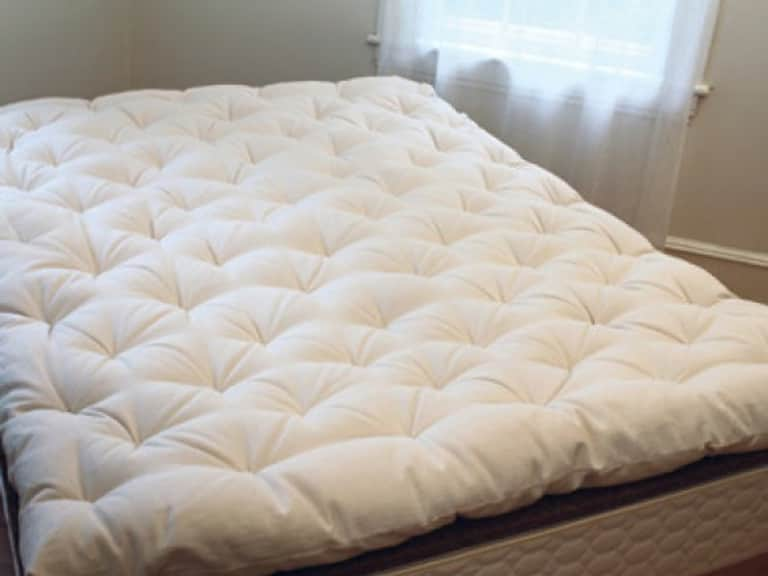
Among the marketplace’s offerings, the Savvy Rest Pastoral Wool Mattress presents a latex-free option that emphasizes natural cushioning and temperature regulation through organic wool batting inside a tufted organic cotton outer cover. This mattress aligns well with a certification-conscious approach because its core is wool, a natural fiber that has intrinsic moisture-wicking and breathable properties. The use of GOTS-certified organic wool and cotton signals attention to organic content and responsible textile processing, even as the product abstains from latex layers.
If you are evaluating a latex-free and wool-forward design, consider how wool’s properties complement your sleep style: its natural moisture management can be particularly comforting in warmer climates or for sleepers who tend toward warmer nights. The Pastoral model also illustrates how a single product can embody a broader philosophy—minimal synthetic additives, transparent material sourcing, and an emphasis on comfort through natural fibers.
Notes on Availability within the Site
On this site, you can explore products that illustrate the organic and natural-sleep ethos in tangible ways. The Savvy Rest Pastoral Wool Mattress, Naturepedic EOS Classic Mattress, and other compatible items demonstrate the range of materials and design approaches that exist within certified organic bedding. When you encounter product listings, pay attention to the fiber content, core materials, and any labels that point to GOTS or GOLS certification in the textile or foam components. The goal is to connect the theory of certifications with real, purchasable options that reflect the standards discussed above.
Authoritative References and Public Resources
For readers seeking external validation, consult the official websites of certification bodies, such as GOTS and GOLS, which provide criteria, approved list of certificate holders, and guidance on interpretation of labels. Public-facing resources, industry white papers, and third-party audits can further illuminate the practical implications of certification claims in the bedding sector.