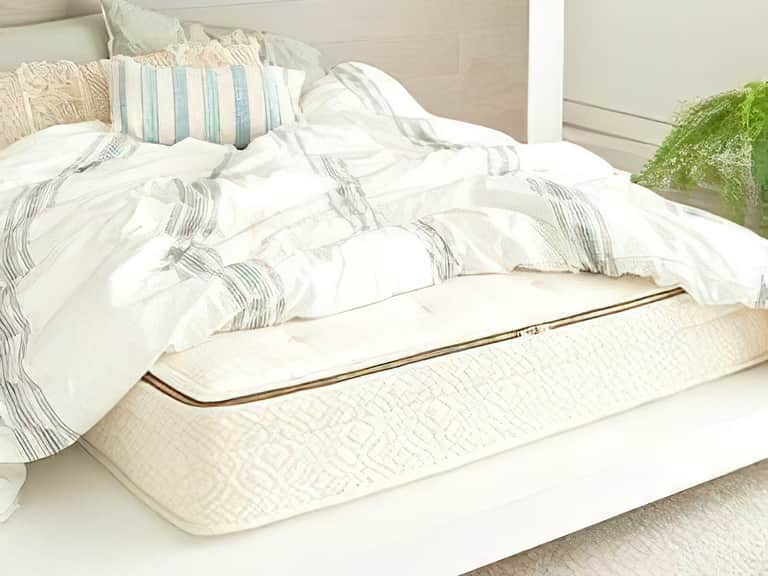
A guide to natural latex beds
Dunlop Latex: What Its Density Means for Bed Support
Latex is often praised for being buoyant, durable, and supportive. Dunlop latex, in particular, is routinely described as dense. But density is not a firmness rating, and neither word, by itself, can tell you how a mattress will feel beneath your shoulders at midnight. To understand a latex bed, look beyond the material name: at firmness measures, layer thickness, construction, and the surface materials that sit above the core.
Published November 22, 2026
The trouble with the word “dense”
In ordinary conversation, dense can mean heavy, compact, firm, or simply difficult to understand. In mattress descriptions, it has a narrower meaning: density generally refers to how much material is contained in a given volume. It may be expressed as mass per unit of volume, though manufacturers and retailers do not always present latex specifications in a uniform way. A denser latex piece contains more material in the same space than a less dense one. That is a useful physical description. It is not a complete forecast of comfort.
Firmness is a different question. It concerns how much a material yields when a force is applied. A mattress can feel firmer or softer according to its formulation, shape, thickness, and the way it is supported. Density may relate to how a latex core is constructed and how it performs over time, but it does not operate as a universal firmness scale. It is possible to encounter two cores made by the same process that feel different, and two pieces with similar density that do not feel identical.
This distinction matters because a number without context has a way of acquiring more authority than it deserves. A shopper sees “high density” and may infer “firm,” “more supportive,” or “more durable.” Those conclusions might be true in a particular comparison, but the label alone cannot establish them. The useful question is not whether a core is dense in the abstract. It is how its properties combine with the rest of the mattress and with the sleeper’s body, preferred position, and sense of comfort.
What Dunlop describes
Dunlop is a method of producing latex foam, not a firmness category. In broad terms, liquid latex is placed in a mold, heated, and cured into a resilient foam. The material is then washed and dried. Dunlop latex may be made from natural rubber latex, synthetic latex, or a blend; the word “Dunlop” alone does not certify the source or organic status of the material. Those claims require separate documentation.
In natural latex mattresses, Dunlop is often used in support layers, where a stable, resilient core can provide the bed’s basic structure. It may also appear in thinner comfort layers or toppers. The same production method can yield latex with different firmness characteristics, depending on the formulation and manufacturing choices. A mattress listing that gives only the word “Dunlop” has named a process, not described the whole feel of the bed.
One familiar description of Dunlop latex is that it can feel substantial or solid. That impression may be relevant, especially when comparing it with another type of latex, but it is not a promise that every Dunlop mattress will be firm. Nor does a description such as “natural latex” tell you how much latex is present, what lies above it, or how the mattress behaves under different parts of the body. A material name is the beginning of a specification, not its conclusion.
Density, firmness, and the language of ratings
Mattress sellers use several kinds of language to describe feel. “Plush,” “medium,” and “firm” are familiar, but they are often subjective labels. One company’s medium may not match another company’s medium. A firmness scale can help when its definitions are clear and applied consistently, but the scale is not a universal measuring stick for every mattress on the market.
Latex specifications may also include an indentation-load deflection, or ILD, rating. This is a measure associated with the force required to compress a material by a specified amount under a defined test. It can offer a more technical point of comparison than an adjective such as “soft.” Yet ILD should not be treated as a direct translation of how a whole mattress will feel. Test methods, sample conditions, layer thickness, and the mattress design all affect what the number can tell you. Retailers may also present ratings using different conventions, so it is worth asking what the figure refers to.
Think of these measures as related but not interchangeable. Density describes the amount of material in a volume. ILD describes resistance to compression under a particular test. A firmness label summarizes an expected feel, often in consumer-friendly language. Each can provide a piece of evidence; none, alone, describes the complete sleeping experience.
There is another complication: the sensation of support is not identical to firmness. A bed can feel soft at the surface while still providing a deeper layer that resists excessive compression. Conversely, a mattress that feels hard at first contact may not keep a sleeper’s spine comfortably aligned over the course of a night. “Supportive” is most useful when it describes how the mattress responds to the body rather than how unyielding it feels in a showroom.
The layers make the mattress
A latex core does not meet the sleeper in isolation. It works as part of a system. A thin comfort layer can allow the body to feel the firmer support layer more directly. A thicker or softer layer above it may change the first impression, add cushioning, and alter how much the sleeper settles into the bed. A quilted cover, wool, cotton, or other filling can also affect the surface sensation, even when it contributes only a modest amount of material.
Thickness matters for the same reason. A mattress with several inches of latex above a support base may feel different from one with a single latex layer, even if both use material described as Dunlop. The arrangement of the layers matters, too. A comfort layer and a support layer perform different jobs, and the transition between them can shape how gradually or abruptly the mattress responds to weight.
The support underneath the mattress belongs in this discussion. A suitable, level foundation helps the mattress perform as intended. Slats, a platform, an adjustable base, or a foundation may differ in design, and manufacturer guidance should be checked before use. An uneven or incompatible base can change the feel of a bed and may affect its long-term performance. A mattress comparison that ignores the foundation is like a comparison of shoes that leaves out the ground.
Body weight and sleep position add further variation. A person who sleeps on their side may be especially attentive to cushioning at the shoulders and hips. A back sleeper may focus on whether the lower back feels adequately supported. Stomach sleepers often have different preferences about how much the midsection sinks. These are broad tendencies, not rules: bodies, pain histories, and comfort preferences are individual.
How to read a mattress description
When a retailer calls a bed a natural latex mattress, it is reasonable to ask what that means in practical terms. Is the latex the support core, a comfort layer, or both? How thick is each layer? Is the core Dunlop or another type of latex? Is the material natural, synthetic, or blended? If organic content is claimed, what certification applies to which component? A detailed materials description is more informative than a string of reassuring adjectives.
For a side-by-side comparison, gather the same kinds of information for each mattress. A simple checklist can keep the language from doing the thinking for you:
- Layer construction: Record the material and thickness of each layer, from the cover down to the support base.
- Firmness information: Note the stated feel and any technical rating, including how the seller defines or measures it.
- Latex details: Find out whether the latex is Dunlop, what its source is, and where it appears in the mattress.
- Certifications: Check which materials or stages of production are covered, rather than assuming a certification applies to every component.
- Foundation requirements: Confirm that your bed frame or base meets the manufacturer’s recommendations.
- Trial and warranty terms: Read the conditions, including return fees, required break-in periods, and exclusions.
These details do not turn mattress shopping into an exact science. They do make comparisons more honest. If one seller provides a firmness rating but no explanation of the scale, and another provides layer thicknesses and a clear construction description, the second listing gives you more to work with, even if it does not settle the question of personal comfort.
What a real-world example can—and cannot—show
The Naturepedic Azure Hybrid Organic Mattress illustrates why “latex mattress” does not necessarily mean a solid block of latex. Its listed construction combines six inches of wrapped coils with three inches of organic Dunlop latex, alongside a wool blend and an organic cotton cover; its stated overall height is ten inches. In other words, the latex is part of a hybrid arrangement, not the entire support system.
That description tells a shopper something meaningful about the construction. It does not, by itself, predict whether the bed will feel right. The coils and latex work together, while the wool and cover shape the upper surface. The product information also describes a dual-firmness option in some sizes, a feature that may matter to partners who prefer different feels. Even so, the listed materials and options should be weighed alongside the retailer’s current specifications and trial terms. The example is useful precisely because it shows how many separate decisions are tucked inside the phrase “latex support.”
Does more density mean greater durability?
Durability is often invoked in discussions of density, and a material’s composition can be relevant to how it holds up. But density should not be treated as a guarantee of service life. Longevity depends on the material, the way it is made, the design of the mattress, the quality of its construction, the base beneath it, and how it is used. A single number cannot account for all of those things.
Ask the manufacturer how it defines durability claims and whether the warranty gives useful evidence about expected performance. Read the warranty carefully: a warranty is a contract with conditions, not a prediction that a mattress will remain comfortable for a specified number of years. It may address visible structural defects while excluding normal changes in feel or comfort. A generous-sounding term can conceal narrow coverage; the exclusions deserve attention.
Care also matters. Follow instructions about ventilation, rotation, turning, and cleaning. Some latex mattresses are designed to be one-sided; others may have specific rotation guidance. A cover that is not removable should not be treated as though it were machine washable. Small habits, such as using a compatible foundation and protecting the mattress from spills, can matter more than trying to infer a whole product’s future from its density label.
Organic, natural, and certified are not synonyms
Because organic latex beds are often marketed around materials, the language deserves a second look. “Natural” is not the same as “organic,” and neither word, without context, explains the composition of every layer. A mattress can combine latex with wool, cotton, coils, adhesives, or other components. The relevant question is not simply whether the mattress is called organic, but which materials are certified, by whom, and under what standard.
Certification can help establish that a defined material or production process meets specified requirements. It does not automatically certify the entire finished mattress, and it is not a rating of firmness, comfort, or durability. Ask for the scope of the certification and verify that the product’s current documentation supports the claim. The habit is not cynical; it is a way of distinguishing evidence from atmosphere.
For a consumer comparing beds, these are separate questions: What does the mattress feel like? How is it constructed? What is in it? What can be verified? The answers may overlap, but one cannot stand in for another. A bed may have well-documented materials and still be too firm for a particular sleeper. A comfortable bed may have incomplete information about its components. Clear evaluation keeps both facts in view.
A more useful way to decide
Start with your own experience rather than a material’s reputation. If possible, test a mattress for long enough to notice more than the first few minutes of contact. Pay attention to pressure at the shoulders and hips, how easily you change position, whether your lower back feels supported, and whether you wake with a new or aggravated ache. Those observations are not a medical diagnosis, but they can help you describe what is and is not working.
Then use the specifications to understand why a mattress might feel as it does. Compare the thickness and position of the latex layers; examine the firmness language and any test rating; consider the cover and any added wool or cotton; and confirm the foundation. If you are choosing remotely, look closely at the sleep trial and return policy. A trial period is not merely a shopping perk. It acknowledges that a mattress is difficult to judge from a list of materials and a brief showroom visit.
For couples, the variables multiply. Different body weights and positions can make a single firmness feel unlike two people. Split firmness, where available, can help address that mismatch, but it is not the only consideration. Motion transfer, edge feel, temperature, and the ability to use an adjustable base may matter as much as the latex specification. The right comparison is between complete sleep systems, not isolated material names.
The short version
Dunlop latex tells you how a latex foam was produced. Density tells you about the amount of material in a volume. Firmness describes resistance to compression or, in consumer language, a bed’s perceived feel. These ideas are connected, but they are not interchangeable. None can reliably predict the comfort of a finished mattress without information about the layers around it.
When evaluating natural latex beds, look for a transparent account of the core, layer thickness, surface materials, stated firmness, and any technical measurements. Treat certifications as evidence about defined materials or processes, not as proof of comfort. Check the foundation requirements and the terms for trying or returning the mattress. Most important, keep the description and your own experience in conversation: specifications can narrow the field, but your body supplies the final review.
Density has a place in that review. It is simply not the whole story. A useful mattress description allows the number to sit beside the construction details, where it can do what numbers do best: clarify one part of a much larger picture.